


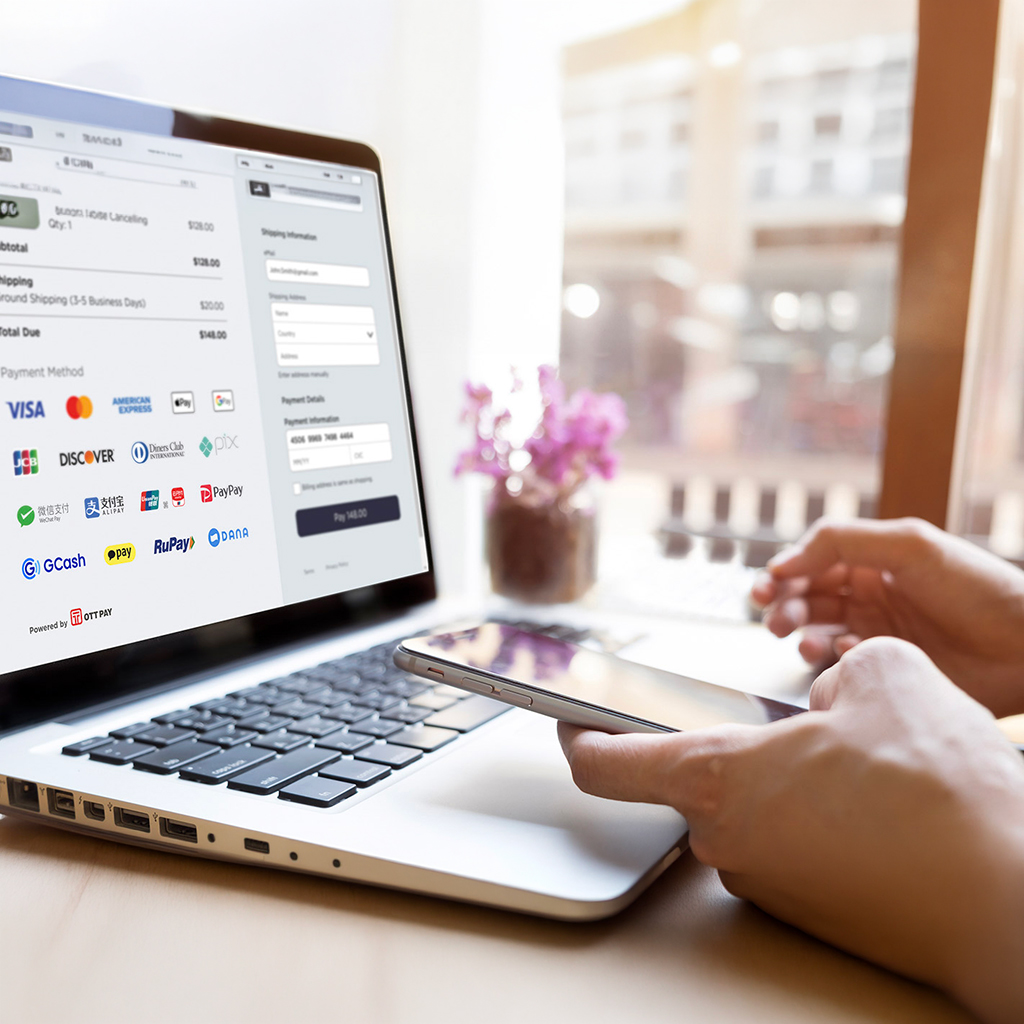
You’d like to start selling your products or services online through your business’s website, but you’re not sure what to do next. The solution: you need to add a payment gateway to your website.
What is a payment gateway?
A payment gateway is a tool that lets you add the ability to accept online payments directly through your business website. It works in the background to securely transfer money from your customer’s account to yours, while keeping sensitive details — like credit card numbers — safe. Customers can pay online with credit cards, debit cards, digital wallets, or even in different currencies.
How payment gateways benefit merchants
There are three ways your business can benefit from adding a payment gateway to your company website:
- Open up opportunities for growth. Instead of being limited to local customers, you can sell to people across the country — or around the world — by accepting secure payments online, any time of day or night.
- Give your customers more flexibility in how they pay. Whether they prefer a credit card, debit card, digital wallets like Apple Pay and Google Pay, or international payment methods like Alipay and WeChat Pay, you’ll be ready to meet their needs and make checkout fast and convenient.
- Save time on admin tasks. Most payment gateways include useful tools such as sales reporting, recurring billing for subscriptions, and speedy deposits into your bank account.
The bottom line: a payment gateway makes it simple for customers to pay you online — and it matters more than it might seem. Checkout research from the Baymard Institute consistently finds that not offering a shopper’s preferred payment method is one of the most common reasons they abandon their cart. A wider range of payment options at checkout isn’t just a convenience — it’s revenue you’d otherwise lose.
How to add a payment gateway to your website
Connecting or integrating a payment gateway into your website sounds like it should require advanced technical skills — the good news is that it doesn’t. It’s actually very simple and straightforward.
Once you’ve chosen a payment gateway provider, they’ll give you a ready-made plug-in or app designed to integrate with popular website platforms such as WordPress, Wix, or Shopify. This can usually be done in a few clicks.
If your website was custom-built from scratch, the payment gateway provider will give your web developer a small piece of code to paste into your site to create the secure payment connection.
Once the gateway is connected, activate the payment options you want to offer — credit cards, debit cards, digital wallets — then run a test purchase. If it goes smoothly, you’re all set to start accepting online payments from customers.
How payment gateways work on the backend of your website for eCommerce
So what actually happens when a customer’s purchase is processed by a payment gateway? Here’s a high-level breakdown of what OTT Pay’s gateway — and gateways generally — do behind the scenes:
- The gateway takes the customer’s payment details — their credit card or digital wallet information — and encrypts it so the data stays private.
- The information is sent to the customer’s bank or card provider to check whether funds are available and the transaction is valid.
- The bank approves or declines the payment and sends that response back through the gateway to your website.
- If approved, the money moves into your merchant account and is later deposited into your business bank account.
All of this happens in a few moments, giving your customer a quick, efficient checkout experience while keeping their payment details safe.
How to choose the right payment gateway for your business
There’s a wide range of payment gateways on the market. Narrowing them down doesn’t have to be overwhelming — here’s a checklist of what to keep in mind:
- What are the fees? Some gateways charge a flat fee per transaction, others take a percentage of each sale — and there could be setup, cancellation, refund, or chargeback fees on top.
- What payment methods does it accept? A wider range of options makes your store accessible to more customers. Confirm the gateway takes credit cards, debit cards, digital wallets, and international methods like Alipay and WeChat Pay.
- Will it integrate with your existing tools? A gateway that connects to your POS system and accounting software cuts down on admin hours and keeps your records accurate.
- Does it have omnichannel capabilities? An omnichannel gateway lets you accept payments online as well as in-store, on mobile, and via QR code.
- Is the security strong? A secure, compliant gateway protects your business from fraud and your customers from identity theft, while keeping you within legal and industry guidelines.
- Does it come with any extras? Look for added tools like invoicing, recurring billing, reporting, and inventory management.
- Can you customize the look? Adding your logo and colours to the checkout page creates a professional, branded experience.
- Is there 24/7 support? When an issue comes up, you want it resolved fast — ask each provider if they offer round-the-clock support with live agents.
OTT Pay’s gateway is built around this exact checklist — one integration that covers cards, digital wallets, QR codes, and cross-border methods like Alipay and WeChat Pay, with real support behind it.
Comparing options? See what OTT Pay’s payment gateway covers.
Frequently asked questions
How much does a payment gateway cost?
It varies by provider and business volume — most charge a per-transaction fee (flat, percentage, or a mix), and some add setup, monthly, or chargeback fees. Ask any provider you’re considering for a full breakdown before committing.
Is a payment gateway the same thing as a payment processor?
Not quite. The gateway captures and encrypts the payment data at checkout; the processor moves that transaction between the customer’s bank and yours. In practice, most providers — OTT Pay included — bundle both into one integration, so you don’t need to manage them separately.
Can a payment gateway accept WeChat Pay, Alipay, or QR code payments?
Yes, provided the gateway supports them. This is worth confirming up front if you want to reach international or mobile-first customers — see our guides on accepting WeChat Pay and QR code payments for more detail.
Conclusion
Choosing and adding the right payment gateway may feel like a big step, but it’s one that can open new markets and grow your sales. The good news is that integrating one into your website is often as simple as installing a plug-in or app with a few clicks, or, on a custom-built site, adding a small piece of code.
OTT Pay’s payment gateway lets you accept payments online, in-store, or on the go — all through one streamlined system. Request a demo to see it in action.